PRIVATE EQUITY

How does private equity work?

Private equity funds typically progress through three main phases — Formation, Investing, and Harvesting. Each stage represents a distinct part of the journey: from setting up the fund and securing commitments, to deploying capital, managing investments, and ultimately returning value to investors.

The three phases

01 Formation

The investment manager structures the fund, articulates its mandate, and secures investor commitments.

02 Investing

Committed capital is drawn down and allocated to portfolio companies aligned with the fund’s strategy.

03 Harvesting

Exits are executed and capital distributions returned to investors, reflecting realised value creation.

Formation

Phase 1

Fund life cycle

Formation

Investing

Harvesting

During the formation phase, the investment manager sets up the fund structure, defines its strategy, and begins engaging potential investors.

Marketing

Here’s an overview of our upcoming investments.

Private Equity Fund Manager

The investment manager promotes their upcoming fund to potential investors, outlining their investment strategy, risk and target return.

Capital Commitments
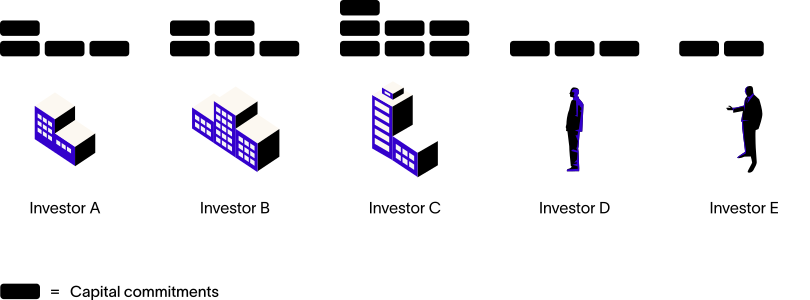
The investors who are interested make capital commitments in line with their investment strategy and mandate.

Fund Close

The fund closes once the sponsor has all the capital they need to proceed.

Investing

Phase 2

Fund life cycle

Formation

Investing

Harvesting

Following fund formation, the investment manager deploys capital into qualified opportunities that align with the fund’s mandate. As part of investing, the fund manager runs a due diligence process to assess the potential of a target company.

Screening

The investment manager evaluates potential investments.

Selection

Once the manager has found an investment prospect, the due diligence process begins.

Capital call

We have identified a compelling investment opportunity.

Private Equity Fund Manager

If the selected company passes due diligence, the investment firm makes an offer, also known as a term sheet. If the company accepts the term, the investment process proceeds. To finance this investment, the investment manager needs funds.

Capital distribution
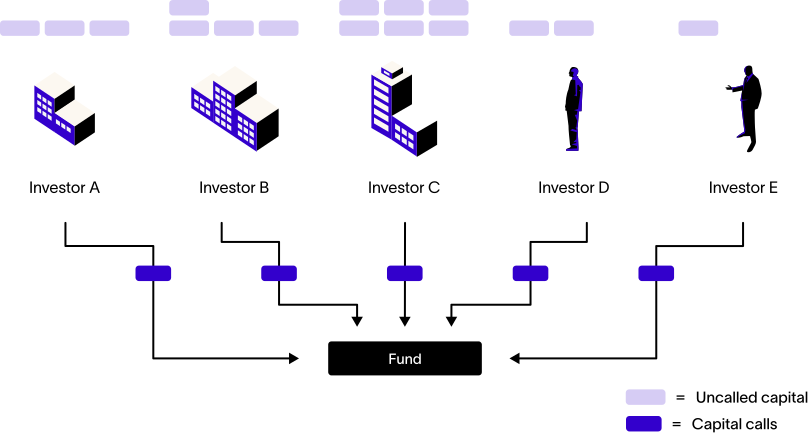
Capital distributions are allocated pro rata, based on each investor’s relative share of the fund’s total commitments. 

Deployment
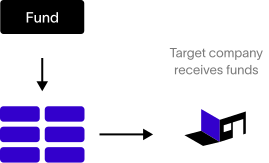
The fund allocates capital to the target company in exchange for either a minority, majority or controlling stake, depending on the fund’s investment strategy.

Assets under management
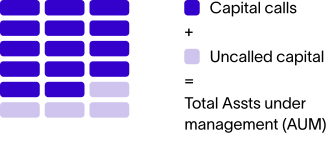
The fund allocates capital to the target company in exchange for either a minority, majority or controlling stake, depending on the fund’s investment strategy.

Holding period
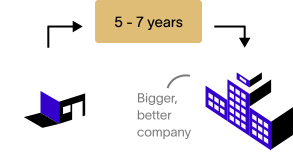
During this period, the investment manager grows the company’s value through active management and financial engineering.

Harvesting

Phase 3

Fund life cycle

Formation

Investing

Harvesting

As portfolio companies mature, the investment manager seeks exit opportunities—typically through an IPO, trade sale, or sponsor-to-sponsor transaction.

Exit

After 5 to 7 years, the investment manager lists the company on an exchange or sells it to another fund or a trade buyer. We call this exiting the position.

The end of an era

The investee company returns capital to the fund.

Capital distributions

Great news! We’ve exited the investment.

Private Equity Fund Manager

Upon exiting the investment, the capital is distributed back to the investors.
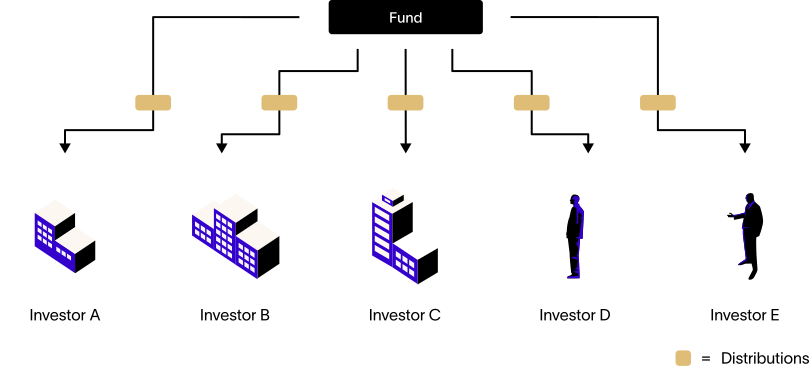
Distributions are made proportionally to each investor’s commitment, reflecting their share of the fund’s ownership.
Why investors look to private markets

Private markets represent a diverse landscape shaped by structure, access and long-term horizons.

Access to non-publicly traded assets

Private markets cover investments outside public exchanges into private companies, private infrastructure, and more.

Active engagement and governance

Many private market strategies involve closer interaction with operators, supported by structured reporting and governance processes.

Distinct return and valuation dynamics

Private market valuations reflect negotiated transactions, fundamentals and longer investment horizons — differing from public-market pricing.

Information advantage

Direct access to management teams and operational data allows for deeper due diligence and strategic oversight.

Different return and correlation patterns

Private market assets may exhibit returns and correlations distinct from public markets due to different fundamentals and valuation practices.

Why investors look to private markets

Private markets represent a diverse landscape shaped by structure, access and long-term horizons.

Access to non-publicly traded assets

Private markets cover investments outside public exchanges into private companies, private infrastructure, and more.

Active engagement and governance

Many private market strategies involve closer interaction with operators, supported by structured reporting and governance processes.

Distinct return and valuation dynamics

Private market valuations reflect negotiated transactions, fundamentals and longer investment horizons — differing from public-market pricing.

Information advantage

Direct access to management teams and operational data allows for deeper due diligence and strategic oversight.

Different return and correlation patterns

Private market assets may exhibit returns and correlations distinct from public markets due to different fundamentals and valuation practices.

Why investors look to private markets

Private markets represent a diverse landscape shaped by structure, access and long-term horizons.

Access to non-publicly traded assets

Private markets cover investments outside public exchanges into private companies, private infrastructure, and more.

Active engagement and governance

Many private market strategies involve closer interaction with operators, supported by structured reporting and governance processes.

Distinct return and valuation dynamics

Private market valuations reflect negotiated transactions, fundamentals and longer investment horizons — differing from public-market pricing.

Information advantage

Direct access to management teams and operational data allows for deeper due diligence and strategic oversight.

Different return and correlation patterns

Private market assets may exhibit returns and correlations distinct from public markets due to different fundamentals and valuation practices.

We’ve built a platform designed around you.

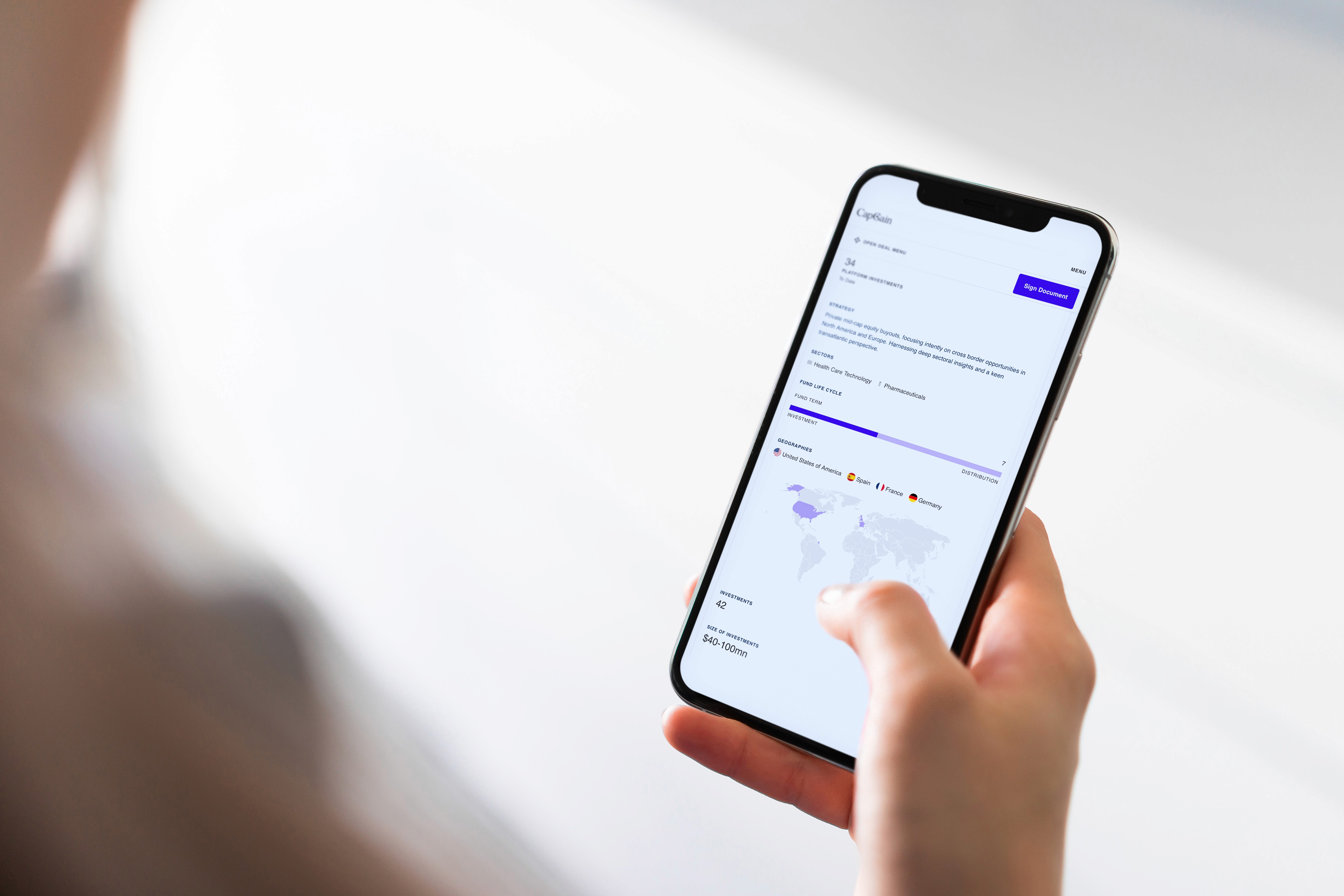
CapGain makes it easier for qualified investors to explore private market opportunities through a single digital gateway.

We’ve built a platform designed around you.

CapGain makes it easier for qualified investors to explore private market opportunities through a single digital gateway.

We’ve built a platform designed around you.

CapGain makes it easier for qualified investors to explore private market opportunities through a single digital gateway.

Act Locally. Invest Globally.

CapGain® is a registered trademark and operated by Arboris Capital Limited. Arboris Capital Limited (“Arboris”) is a company incorporated in the Dubai International Financial Centre (DIFC) under commercial license no. CL8411 and holding license no. F008066 from the Dubai Financial Services Authority (DFSA).

CapGain does not make investment recommendations and no communication, through this website or otherwise, should be construed as a recommendation of any security. Alternative investments in private placements are highly illiquid, speculative, and involve a high degree of risk. Past performance is not indicative of future results. Investors may not get back their money originally invested and those who cannot afford to lose their entire investment should not invest. Prior to investing, carefully consider the respective fund documentation for details about potential risks, charges, and expenses. The value of an investment may go down as well as up.

An investment in a private equity ("PE") fund or investment vehicle is not the same as a deposit with a banking institution. Investors receive illiquid and/or restricted membership interests that may be subject to holding period requirements and/or liquidity concerns. Investors who cannot hold an investment for the long term (at least 10 years) should not invest. In the most sensible investment strategy for PE investing, PE should only be part of your overall investment portfolio. The PE portion of your portfolio may include a balanced portfolio of different PE funds.

The CapGain platform may be accessed by certain international investors globally, including ‘Professional Investors’ (as defined by the DFSA) in the UAE, on a cross-border basis after appropriate checks and confirmation of their status. CapGain’s products are not suitable for retail investors in the UAE.

Act Locally. Invest Globally.

CapGain® is a registered trademark and operated by Arboris Capital Limited. Arboris Capital Limited (“Arboris”) is a company incorporated in the Dubai International Financial Centre (DIFC) under commercial license no. CL8411 and holding license no. F008066 from the Dubai Financial Services Authority (DFSA).

CapGain does not make investment recommendations and no communication, through this website or otherwise, should be construed as a recommendation of any security. Alternative investments in private placements are highly illiquid, speculative, and involve a high degree of risk. Past performance is not indicative of future results. Investors may not get back their money originally invested and those who cannot afford to lose their entire investment should not invest. Prior to investing, carefully consider the respective fund documentation for details about potential risks, charges, and expenses. The value of an investment may go down as well as up.

An investment in a private equity ("PE") fund or investment vehicle is not the same as a deposit with a banking institution. Investors receive illiquid and/or restricted membership interests that may be subject to holding period requirements and/or liquidity concerns. Investors who cannot hold an investment for the long term (at least 10 years) should not invest. In the most sensible investment strategy for PE investing, PE should only be part of your overall investment portfolio. The PE portion of your portfolio may include a balanced portfolio of different PE funds.

The CapGain platform may be accessed by certain international investors globally, including ‘Professional Investors’ (as defined by the DFSA) in the UAE, on a cross-border basis after appropriate checks and confirmation of their status. CapGain’s products are not suitable for retail investors in the UAE.

Act Locally.
Invest Globally.

CapGain® is a registered trademark and operated by Arboris Capital Limited. Arboris Capital Limited (“Arboris”) is a company incorporated in the Dubai International Financial Centre (DIFC) under commercial license no. CL8411 and holding license no. F008066 from the Dubai Financial Services Authority (DFSA).

CapGain does not make investment recommendations and no communication, through this website or otherwise, should be construed as a recommendation of any security. Alternative investments in private placements are highly illiquid, speculative, and involve a high degree of risk. Past performance is not indicative of future results. Investors may not get back their money originally invested and those who cannot afford to lose their entire investment should not invest. Prior to investing, carefully consider the respective fund documentation for details about potential risks, charges, and expenses. The value of an investment may go down as well as up.

An investment in a private equity ("PE") fund or investment vehicle is not the same as a deposit with a banking institution. Investors receive illiquid and/or restricted membership interests that may be subject to holding period requirements and/or liquidity concerns. Investors who cannot hold an investment for the long term (at least 10 years) should not invest. In the most sensible investment strategy for PE investing, PE should only be part of your overall investment portfolio. The PE portion of your portfolio may include a balanced portfolio of different PE funds.

The CapGain platform may be accessed by certain international investors globally, including ‘Professional Investors’ (as defined by the DFSA) in the UAE, on a cross-border basis after appropriate checks and confirmation of their status. CapGain’s products are not suitable for retail investors in the UAE.