PRIVATE credit
What is private credit?
Private credit refers to loans made by non-bank institutions directly to companies, typically outside public markets. It’s part of the broader private markets ecosystem — sitting between equity and traditional bank lending.
Formation
During the formation phase, the investment manager sets up the fund structure, defines its credit strategy, and begins engaging potential investors.
Phase 1
Fund life cycle
Fundraising
providing credit
repayments
Marketing
The investment manager promotes their upcoming fund to potential investors, outlining their investment strategy, risk and target return.
Here’s an overview of our upcoming investments.

Private Equity Fund Manager
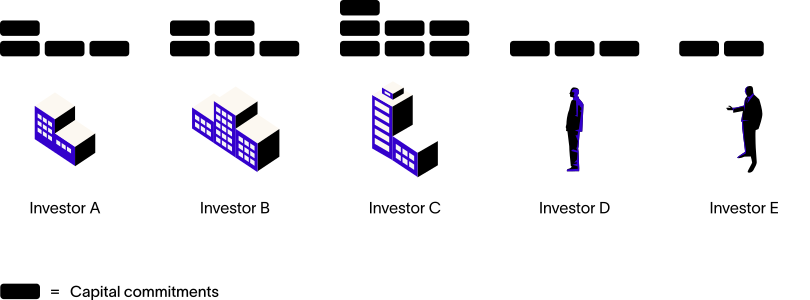
The investors who are interested make capital commitments in line with their investment strategy and mandate.
Fund close
The manager now has the committed capital needed to start deploying into private credit opportunities.
Formation
During the formation phase, the investment manager sets up the fund structure, defines its credit strategy, and begins engaging potential investors.
Phase 1
Fund life cycle
Fundraising
providing credit
repayments
Marketing
The investment manager promotes their upcoming fund to potential investors, outlining their investment strategy, risk and target return.
Here’s an overview of our upcoming investments.
Private Equity Fund Manager
The investors who are interested make capital commitments in line with their investment strategy and mandate.
Fund close
The manager now has the committed capital needed to start deploying into private credit opportunities.
Formation
During the formation phase, the investment manager sets up the fund structure, defines its credit strategy, and begins engaging potential investors.
Phase 1
Fund life cycle
Fundraising
providing credit
repayments
Marketing
The investment manager promotes their upcoming fund to potential investors, outlining their investment strategy, risk and target return.
Here’s an overview of our upcoming investments.
Private Equity Fund Manager
The investors who are interested make capital commitments in line with their investment strategy and mandate.
Fund close
The manager now has the committed capital needed to start deploying into private credit opportunities.
Providing credit
A specialised investment team reviews potential opportunities that fit the fund’s strategy. Each opportunity is screened against key criteria such as sector focus, financial performance, growth potential, and management quality.
Phase 1
Fund life cycle
Fundraising
providing credit
repayments
Screening

The investment manager reviews a wide pipeline of potential borrowers, evaluating their credit quality, cash flows, and collateral. Only a fraction makes it past this first screen.
Selection

Once a promising borrower is identified, the manager begins due diligence — analysing financials, business model, and risk profile — before negotiating loan terms.
Tailored loan solutions
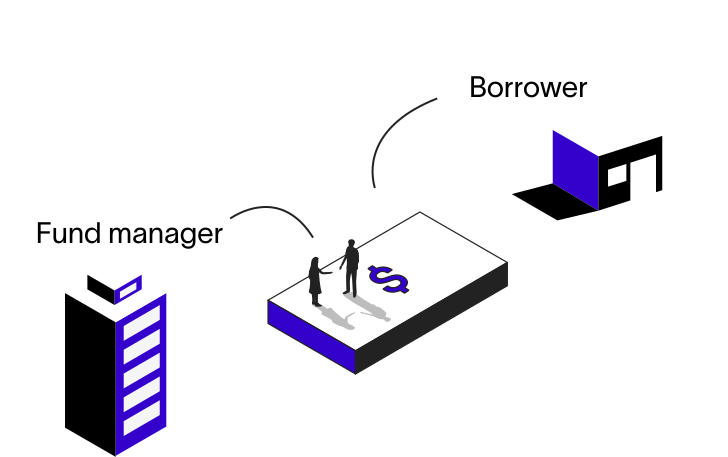
Private credit funds provide bespoke financing, with terms negotiated directly between the fund and the borrower rather than set by standardised criteria.
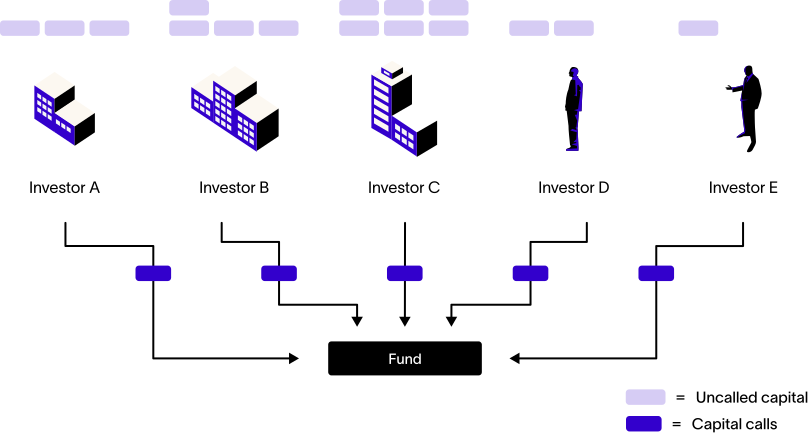
When a borrower is approved for financing, the fund calls committed capital from its investors. Each investor contributes a portion of their pledged amount, ensuring the fund has sufficient liquidity to issue the loan. Capital distributions are allocated pro rata, based on each investor’s relative share of the fund’s total commitments.
Loan issuance
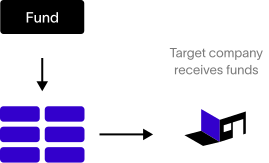
Instead of taking equity, the fund extends a loan structured to align with the borrower’s capital needs, cash flow profile, and repayment capacity.
Assets under management
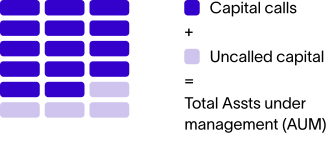
The difference between the total AUM and the capital deployed is uncalled capital - also known as dry powder. And the ratio between the two is ‘the capital overhang’.
Who are the borrowers?
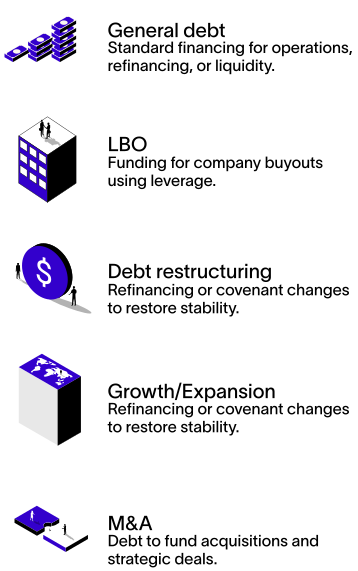
Private credit caters to a diverse - and rapidly evolving - group of lenders
Providing credit
A specialised investment team reviews potential opportunities that fit the fund’s strategy. Each opportunity is screened against key criteria such as sector focus, financial performance, growth potential, and management quality.
Phase 1
Fund life cycle
Fundraising
providing credit
repayments
Screening
The investment manager reviews a wide pipeline of potential borrowers, evaluating their credit quality, cash flows, and collateral. Only a fraction makes it past this first screen.
Selection
Once a promising borrower is identified, the manager begins due diligence — analysing financials, business model, and risk profile — before negotiating loan terms.
Tailored loan solutions
Private credit funds provide bespoke financing, with terms negotiated directly between the fund and the borrower rather than set by standardised criteria.
When a borrower is approved for financing, the fund calls committed capital from its investors. Each investor contributes a portion of their pledged amount, ensuring the fund has sufficient liquidity to issue the loan. Capital distributions are allocated pro rata, based on each investor’s relative share of the fund’s total commitments.
Loan issuance
Instead of taking equity, the fund extends a loan structured to align with the borrower’s capital needs, cash flow profile, and repayment capacity.
Assets under management
The difference between the total AUM and the capital deployed is uncalled capital - also known as dry powder. And the ratio between the two is ‘the capital overhang’.
Who are the borrowers?
Private credit caters to a diverse - and rapidly evolving - group of lenders
Providing credit
A specialised investment team reviews potential opportunities that fit the fund’s strategy. Each opportunity is screened against key criteria such as sector focus, financial performance, growth potential, and management quality.
Phase 1
Fund life cycle
Fundraising
providing credit
repayments
Screening
The investment manager reviews a wide pipeline of potential borrowers, evaluating their credit quality, cash flows, and collateral. Only a fraction makes it past this first screen.
Selection
Once a promising borrower is identified, the manager begins due diligence — analysing financials, business model, and risk profile — before negotiating loan terms.
Tailored loan solutions
Private credit funds provide bespoke financing, with terms negotiated directly between the fund and the borrower rather than set by standardised criteria.
When a borrower is approved for financing, the fund calls committed capital from its investors. Each investor contributes a portion of their pledged amount, ensuring the fund has sufficient liquidity to issue the loan. Capital distributions are allocated pro rata, based on each investor’s relative share of the fund’s total commitments.
Loan issuance
Instead of taking equity, the fund extends a loan structured to align with the borrower’s capital needs, cash flow profile, and repayment capacity.
Assets under management
The difference between the total AUM and the capital deployed is uncalled capital - also known as dry powder. And the ratio between the two is ‘the capital overhang’.
Who are the borrowers?
Private credit caters to a diverse - and rapidly evolving - group of lenders
Repayments
As loans mature, repayments and interest begin to flow back to the fund. Active monitoring ensures borrowers meet obligations and preserves investor capital.
Phase 3
Fund life cycle
Fundraising
providing credit
repayments
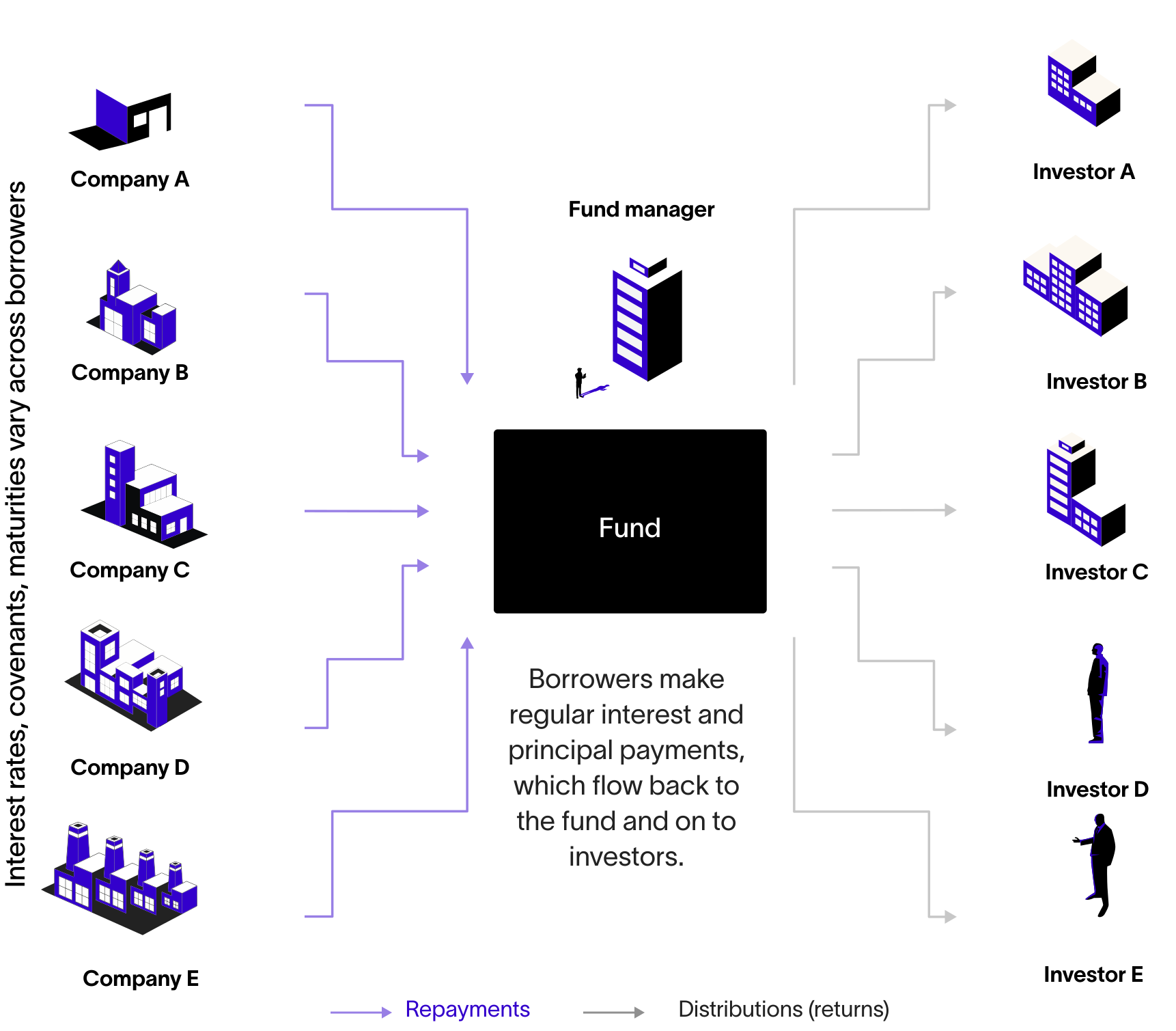
In the event that borrower’s circumstances change, loan terms can be adjusted to safeguard both borrower stability and investor capital.
Repayments
As loans mature, repayments and interest begin to flow back to the fund. Active monitoring ensures borrowers meet obligations and preserves investor capital.
Phase 3
Fund life cycle
Fundraising
providing credit
repayments
In the event that borrower’s circumstances change, loan terms can be adjusted to safeguard both borrower stability and investor capital.
Repayments
As loans mature, repayments and interest begin to flow back to the fund. Active monitoring ensures borrowers meet obligations and preserves investor capital.
Phase 3
Fund life cycle
Fundraising
providing credit
repayments
In the event that borrower’s circumstances change, loan terms can be adjusted to safeguard both borrower stability and investor capital.
Private credit in practice
Now that we understand how private credit works, let’s look at how it’s applied across real-world borrowers and strategies.
Why do borrowers choose private credit?
Private credit provides borrowers with faster, more flexible, and confidential financing solutions than traditional banks.
Speed & certainty
Faster execution than traditional banks, with less red tape.
Flexibility
Tailored structures—custom maturities, covenants, and repayment profiles.
Confidentiality
Private arrangements avoid public disclosures required in syndicated or public markets.
Non-dilutive capital
Founders retain ownership while accessing growth capital.
Private credit in practice
Now that we understand how private credit works, let’s look at how it’s applied across real-world borrowers and strategies.
Why do borrowers choose private credit?
Private credit provides borrowers with faster, more flexible, and confidential financing solutions than traditional banks.
Speed & certainty
Faster execution than traditional banks, with less red tape.
Flexibility
Tailored structures—custom maturities, covenants, and repayment profiles.
Confidentiality
Private arrangements avoid public disclosures required in syndicated or public markets.
Non-dilutive capital
Founders retain ownership while accessing growth capital.
Private credit in practice
Now that we understand how private credit works, let’s look at how it’s applied across real-world borrowers and strategies.
Why do borrowers choose private credit?
Private credit provides borrowers with faster, more flexible, and confidential financing solutions than traditional banks.
Speed & certainty
Faster execution than traditional banks, with less red tape.
Flexibility
Tailored structures—custom maturities, covenants, and repayment profiles.
Confidentiality
Private arrangements avoid public disclosures required in syndicated or public markets.
Non-dilutive capital
Founders retain ownership while accessing growth capital.
The private credit ladder: Mapping return and risk across strategies
For illustrative purposes only
From stable cash flows to complex opportunities: Private credit spans a broad borrower base — from mid-market businesses seeking growth finance to sponsor-backed firms and special-situation strategies.
Offering vs. origination
Understanding the difference between traditional bank loans and private credit
Banks offer loans as part of a relationship package - deposits, payments, and trade finance - relying on standardised checks around credit scores, collateral, and regulatory ratios.
Private credit funds originate loans through deep financial, operational, and downside analysis — structuring terms, covenants, and maturities to align borrower needs with investor return targets.
This shift transforms lending from a service to an asset class.
The private credit ladder: Mapping return and risk across strategies
For illustrative purposes only
From stable cash flows to complex opportunities: Private credit spans a broad borrower base — from mid-market businesses seeking growth finance to sponsor-backed firms and special-situation strategies.
Offering vs. origination
Understanding the difference between traditional bank loans and private credit
Banks offer loans as part of a relationship package - deposits, payments, and trade finance - relying on standardised checks around credit scores, collateral, and regulatory ratios.
Private credit funds originate loans through deep financial, operational, and downside analysis — structuring terms, covenants, and maturities to align borrower needs with investor return targets.
This shift transforms lending from a service to an asset class.
The private credit ladder: Mapping return and risk across strategies
For illustrative purposes only
From stable cash flows to complex opportunities: Private credit spans a broad borrower base — from mid-market businesses seeking growth finance to sponsor-backed firms and special-situation strategies.
Offering vs. Origination
Understanding the difference between traditional bank loans and private credit
Banks offer loans as part of a relationship package - deposits, payments, and trade finance - relying on standardised checks around credit scores, collateral, and regulatory ratios.
Private credit funds originate loans through deep financial, operational, and downside analysis — structuring terms, covenants, and maturities to align borrower needs with investor return targets.
This shift transforms lending from a service to an asset class.
Why investors look to private credit
Private credit offers access to stable, income-generating opportunities with enhanced yields, portfolio resilience, and structural protection through direct lending.
Higher yields
Direct lending captures an illiquidity premium, often delivering returns above public credit.
Diversification
Low correlation to stocks and bonds helps stabilise portfolios across market cycles.
Downside protection
Senior secured loans with bespoke covenants offer structural risk control.
Inflation hedge
Floating-rate structures adjust with interest rates, protecting real returns.
Stable income
Regular coupon payments provide steady, predictable cash flows.
Why investors look to private credit
Private credit offers access to stable, income-generating opportunities with enhanced yields, portfolio resilience, and structural protection through direct lending.
Higher yields
Direct lending captures an illiquidity premium, often delivering returns above public credit.
Diversification
Low correlation to stocks and bonds helps stabilise portfolios across market cycles.
Downside protection
Senior secured loans with bespoke covenants offer structural risk control.
Inflation hedge
Floating-rate structures adjust with interest rates, protecting real returns.
Stable income
Regular coupon payments provide steady, predictable cash flows.
Why investors look to private credit
Private credit offers access to stable, income-generating opportunities with enhanced yields, portfolio resilience, and structural protection through direct lending.
Higher yields
Direct lending captures an illiquidity premium, often delivering returns above public credit.
Diversification
Low correlation to stocks and bonds helps stabilise portfolios across market cycles.
Downside protection
Senior secured loans with bespoke covenants offer structural risk control.
Inflation hedge
Floating-rate structures adjust with interest rates, protecting real returns.
Stable income
Regular coupon payments provide steady, predictable cash flows.

We’ve built a platform designed around you.
CapGain makes it easier for qualified investors to explore private market opportunities through a single digital gateway.
We’ve built a platform designed around you.
CapGain makes it easier for qualified investors to explore private market opportunities through a single digital gateway.
We’ve built a platform designed around you.
CapGain makes it easier for qualified investors to explore private market opportunities through a single digital gateway.