PRIVATE EQUITY
What is private equity?
Private equity (PE) is an investment class where capital is invested directly into private companies — or used to take public companies private — with the goal of improving their value over time and eventually selling them for profit.
Key characteristics of private equity
Privately held
Investments are made in companies not listed on public exchanges.
Long-term focus
Capital is typically locked for 7–10 years to create value
Active ownership
Investors take an operational role to improve performance and governance.
High return potential
Offers higher risk and potential reward than traditional public markets.
Key characteristics of private equity
Privately held
Investments are made in companies not listed on public exchanges.
Long-term focus
Capital is typically locked for 7–10 years to create value
Active ownership
Investors take an operational role to improve performance and governance.
High return potential
Offers higher risk and potential reward than traditional public markets.
Key characteristics of private equity
Privately held
Investments are made in companies not listed on public exchanges.
Long-term focus
Capital is typically locked for 7–10 years to create value
Active ownership
Investors take an operational role to improve performance and governance.
High return potential
Offers higher risk and potential reward than traditional public markets.
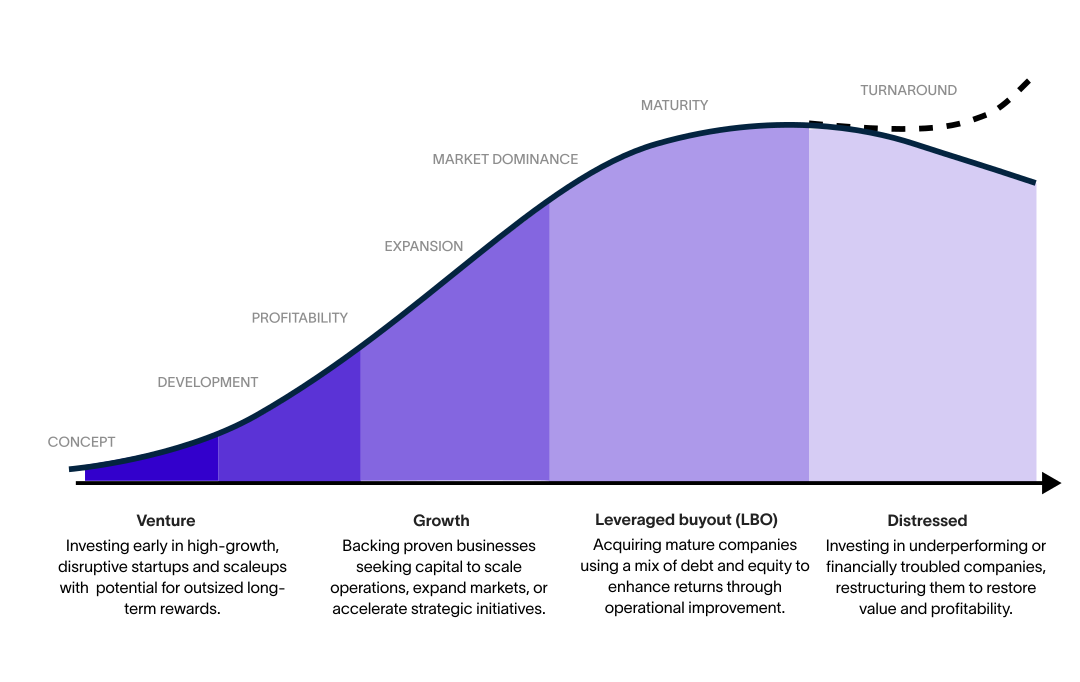
Private equity supports businesses at different stages of maturity
From fueling innovation to driving transformation, private equity invests in companies through every phase of the business lifecycle, from startups to turnarounds.
Private equity supports businesses at different stages of maturity
From fueling innovation to driving transformation, private equity invests in companies through every phase of the business lifecycle, from startups to turnarounds.
Private equity supports businesses at different stages of maturity
From fueling innovation to driving transformation, private equity invests in companies through every phase of the business lifecycle, from startups to turnarounds.
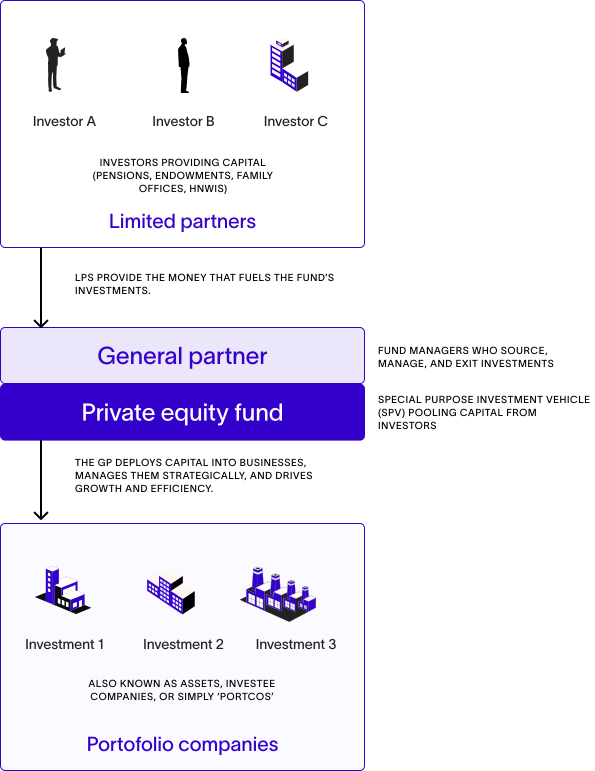
How to invest in private equity
Private equity investments are accessed through funds — professionally managed vehicles that pool capital from multiple investors. Each fund is managed by a General Partner (GP) who invests that capital into private companies or assets on behalf of Limited Partners (LPs) — the investors.
How to invest in private equity
Private equity investments are accessed through funds — professionally managed vehicles that pool capital from multiple investors. Each fund is managed by a General Partner (GP) who invests that capital into private companies or assets on behalf of Limited Partners (LPs) — the investors.
How to invest in private equity
Private equity investments are accessed through funds — professionally managed vehicles that pool capital from multiple investors. Each fund is managed by a General Partner (GP) who invests that capital into private companies or assets on behalf of Limited Partners (LPs) — the investors.
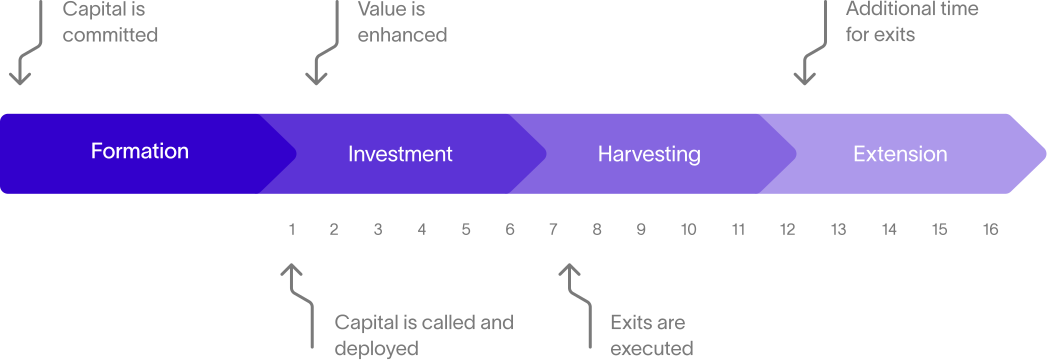
Private equity life cycle
From commitment to exit, private equity unfolds over years — compounding capital through strategy and time.
Private equity life cycle
From commitment to exit, private equity unfolds over years — compounding capital through strategy and time.
Private equity life cycle
From commitment to exit, private equity unfolds over years — compounding capital through strategy and time.
What private equity aims to do
PE firms aim to transform companies through strategic, financial, and operational improvements — not just fund them.
Improving efficiency & governance
Streamlining operations, tightening oversight, and enhancing decision-making to increase profitability and reduce organizational friction.
Expanding to new markets
Entering untapped regions or customer segments to diversify revenue streams and strengthen competitive positioning.
Professionalising management
Installing experienced leadership, aligning incentives, and embedding accountability to drive disciplined, strategic growth.
Restructuring finances
Rebalancing debt and equity, optimising capital allocation, and improving liquidity to enhance financial stability and performance.
What private equity aims to do
PE firms aim to transform companies through strategic, financial, and operational improvements — not just fund them.
Improving efficiency & governance
Streamlining operations, tightening oversight, and enhancing decision-making to increase profitability and reduce organizational friction.
Expanding to new markets
Entering untapped regions or customer segments to diversify revenue streams and strengthen competitive positioning.
Professionalising management
Installing experienced leadership, aligning incentives, and embedding accountability to drive disciplined, strategic growth.
Restructuring finances
Rebalancing debt and equity, optimising capital allocation, and improving liquidity to enhance financial stability and performance.
What private equity aims to do
PE firms aim to transform companies through strategic, financial, and operational improvements — not just fund them.
Improving efficiency & governance
Streamlining operations, tightening oversight, and enhancing decision-making to increase profitability and reduce organizational friction.
Expanding to new markets
Entering untapped regions or customer segments to diversify revenue streams and strengthen competitive positioning.
Professionalising management
Installing experienced leadership, aligning incentives, and embedding accountability to drive disciplined, strategic growth.
Restructuring finances
Rebalancing debt and equity, optimising capital allocation, and improving liquidity to enhance financial stability and performance.
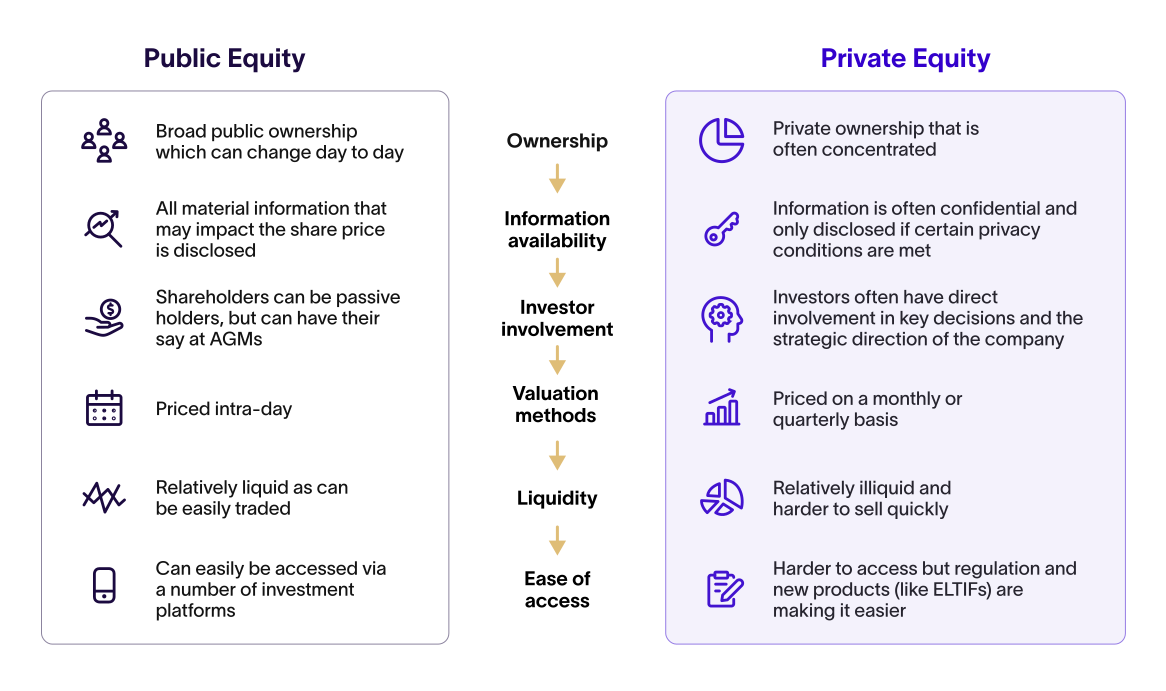
Public vs. Private equity
A side-by-side overview of how the two markets differ across ownership, information, valuation, liquidity, and access.
Public vs. Private equity
A side-by-side overview of how the two markets differ across ownership, information, valuation, liquidity, and access.
Public vs. Private equity
A side-by-side overview of how the two markets differ across ownership, information, valuation, liquidity, and access.
Why investors look to private equity
From commitment to exit, private equity unfolds over years — compounding capital through strategy and time.
Access to high-growth opportunities
Private equity captures businesses early — before they go public — where growth potential and value creation are greatest.
Active value creation
Fund managers don’t just buy and hold; they actively build, restructure, and grow portfolio companies to unlock returns.
Diversification and resilience
Private assets often move differently from public markets, helping smooth volatility and protect long-term portfolios.
Information advantage
Direct access to management teams and operational data allows for deeper due diligence and strategic oversight.
Information advantage
Direct access to management teams and operational data allows for deeper due diligence and strategic oversight.
Why investors look to private equity
From commitment to exit, private equity unfolds over years — compounding capital through strategy and time.
Access to high-growth opportunities
Private equity captures businesses early — before they go public — where growth potential and value creation are greatest.
Active value creation
Fund managers don’t just buy and hold; they actively build, restructure, and grow portfolio companies to unlock returns.
Diversification and resilience
Private assets often move differently from public markets, helping smooth volatility and protect long-term portfolios.
Information advantage
Direct access to management teams and operational data allows for deeper due diligence and strategic oversight.
Information advantage
Direct access to management teams and operational data allows for deeper due diligence and strategic oversight.
Why investors look to private equity
From commitment to exit, private equity unfolds over years — compounding capital through strategy and time.
Access to high-growth opportunities
Private equity captures businesses early — before they go public — where growth potential and value creation are greatest.
Active value creation
Fund managers don’t just buy and hold; they actively build, restructure, and grow portfolio companies to unlock returns.
Diversification and resilience
Private assets often move differently from public markets, helping smooth volatility and protect long-term portfolios.
Information advantage
Direct access to management teams and operational data allows for deeper due diligence and strategic oversight.
Information advantage
Direct access to management teams and operational data allows for deeper due diligence and strategic oversight.

We’ve built a platform designed around you.
CapGain makes it easier for qualified investors to explore private market opportunities through a single digital gateway.
We’ve built a platform designed around you.
CapGain makes it easier for qualified investors to explore private market opportunities through a single digital gateway.
We’ve built a platform designed around you.
CapGain makes it easier for qualified investors to explore private market opportunities through a single digital gateway.