Smart diversification isn't just capital spreading — it's aligning your portfolio with a conscious worldview, building conviction in uncorrelated assets, and subtracting fragility rather than chasing returns. The goal is a resilient portfolio that survives many possible futures, balancing bold allocations with structural stability.

Diversification isn't just about spreading risk — it's a tool for expressing strategic conviction.
Your beliefs about the future shape how you allocate — that’s worldview-based investing.
Capturing upside requires clarity: what do you believe will outperform, and why?
Positioning isn't passive. It's an active decision about where you lean in — and where you don’t.
There is no shortage of investment opportunities in this world. In a market landscape saturated with noise, narratives, and novelty, knowing where to focus is critical — but so is making sure your portfolio can absorb shocks without compromising long-term returns.
To build a resilient portfolio, investors need both conviction and caution — not as opposites, but as complements. Diversification, when done well, allows for both.
In this two-part series, we break down the dual mandate of smart diversification:
Part 1 – Carving conviction focuses on how to allocate with clarity — filtering signal from noise, avoiding overexposure, and building high-conviction positions across uncorrelated assets.
Part 2 – Stress testing strength looks at how to pressure-test that portfolio — using drawdown analysis, risk frameworks, and resilience metrics to ensure your capital is not only placed wisely, but protected under strain.
In this article, we’ll unpack how to identify quality exposures, avoid over-diversification, and construct a portfolio that reflects what you truly believe — not just what’s trending.
First things first: What is diversification?
At its core, diversification is about strategic spread: allocating investments across different financial instruments, sectors, and geographies to reduce exposure to any single point of failure. But done well, it’s more than just downside protection — it’s a tool for unlocking better risk-adjusted returns by ensuring that gains in one area aren’t consistently undone by losses in another.
There are several key types of diversification that can work together to balance risk and opportunity:
Asset class diversification means investing across different asset types — from equities and bonds to real estate and commodities. Because each class responds differently to inflation, interest rates, and market cycles, a mix helps buffer overall volatility.
Sector and industry diversification involves spreading exposure across different parts of the economy. Allocating across sectors like healthcare, energy, and tech helps cushion against idiosyncratic shocks, regulatory changes, or demand slumps that hit one industry harder than others.
Geographical diversification reduces reliance on the fate of a single economy. Holding exposure to both developed and emerging markets, for example, allows investors to tap into differentiated growth cycles and political risk profiles.
Company-specific diversification is a finer-grained version within asset classes like equities or credit. Spreading capital across multiple companies protects against idiosyncratic failures — whether due to governance, product risk, or market missteps.
Ultimately, diversification isn’t about eliminating risk — it’s about sculpting the right kind of risk. When used with intention, it can support conviction by allowing bold allocations in some areas to be balanced by stabilisers elsewhere. This interplay between confidence and caution is the hallmark of resilient portfolio construction.
This balance of risk and reward is part numbers, part narrative. The decisions you make about what to hold (and what not to) stem from the stories you believe about how the world works — and where it’s headed.
Bring your worldview into your awareness
Every investment is an implicit worldview. Your portfolio expresses your beliefs about geopolitics, inflationary regimes, innovation cycles, climate, demographics, debt sustainability, etc. As such, your portfolio reflects your assumptions about the future, whether you’ve made them consciously or not.
To bring your worldview into your awareness, ask yourself: What kind of future are you investing toward—and hedging against?
This is the meta-layer of your portfolio assessment. To better shape your understanding, you might consider:
What do you believe is going to happen over the next 5–10 years?
What are the second and third-order implications of that trajectory?
Which industries/regions/markets/financial strategies stand to gain? And which are likely to lose?
Your capital should follow your conviction
Now that you’ve formed your worldview, it’s time for a portfolio inventory check. The purpose of this exercise is to ensure that your current holdings adequately reflect your worldview and identify any gaps in your portfolio. Ask yourself:
Does my portfolio actively express my thesis?
Where am I underexposed to potential breakout themes?
Which assets reflect my directional bets—and which don’t?
Essentially, this is a ‘What do I have? And what do I need?’ Exercise.
For instance, if you believe inflation is here to stay, you could consider real assets, floating-rate credit, and energy. Or you believe in AI-driven productivity gains and capital-intensive infrastructure buildouts. Then you might tilt toward early-stage VC, semiconductor funds, or logistics real estate.
Understanding this interplay between economic drivers is part art, part science. To understand how different strategies might stand to gain from future shifts, review how asset classes, strategies, and sectors have historically responded to inflexion points—moments of policy overhaul, technological disruption, or macro regime change. These turning points often scramble old correlations and create new winners.
Ready to take your conviction mapping to the next level? Explore "The Fads, the Fundamentals, and the Futile" to refine your understanding of what moves the markets.
The marble approach: Sculpting resilience through elimination
Rather than constantly asking “What should I own?”, consider flipping the question: “What introduces fragility?”
In the book by William Green, ‘Richer, Wiser, Happier’, value fund manager Justin McLennan describes his portfolio strategy not as one of selection, but subtraction.¹
Instead of asking, “What should I own?”, he envisions the global investment universe as a single, unshaped block of marble—and begins chipping away at everything that introduces fragility.
This act of removal is guided by one principle: error elimination. McLennan doesn’t try to forecast the best performers. He focuses on avoiding the worst outcomes.
Like a sculptor discarding brittle stone to reveal the enduring core, he builds his portfolio by excluding assets, sectors, and exposures that are overly dependent on narrow outcomes—those that rely too heavily on leverage, regulatory favours, or short-term momentum.
The goal is to construct a portfolio that endures, even when the world doesn’t cooperate.
“Success stems from consciously resisting everything that promotes fragility.”
This mindset stands in contrast to the typical return-maximising strategy. Instead of chasing every shiny object or trending theme, McLennan seeks structural resilience: companies that are unlikely to fade away, assets with real-world utility, and hedges like gold that have historically held value when systems buckle.
The metaphor reminds us that investing is often more about what you don’t do than what you do. Avoiding ruin is underrated. This is the art of investing in uncertain times: resisting the noise, subtracting the fragile, and sculpting something that can weather the next storm, whatever form it takes.
Final thoughts
“Diversification is the only free lunch”
— Harry M. Markowitz
In practice, diversification isn’t just about spreading capital. It’s about spreading conviction across time horizons, worldviews, and risk regimes. It requires both humility and clarity: the humility to accept that you can’t predict the future, and the clarity to build a portfolio that can survive many versions of it.
In Part Two, we look at how to assess fragility, helping you anchor your portfolio in substance, not sentiment.
William Green, Richer, Wiser, Happier: How the World's Greatest Investors Win in Markets and Life, January 1 2021.
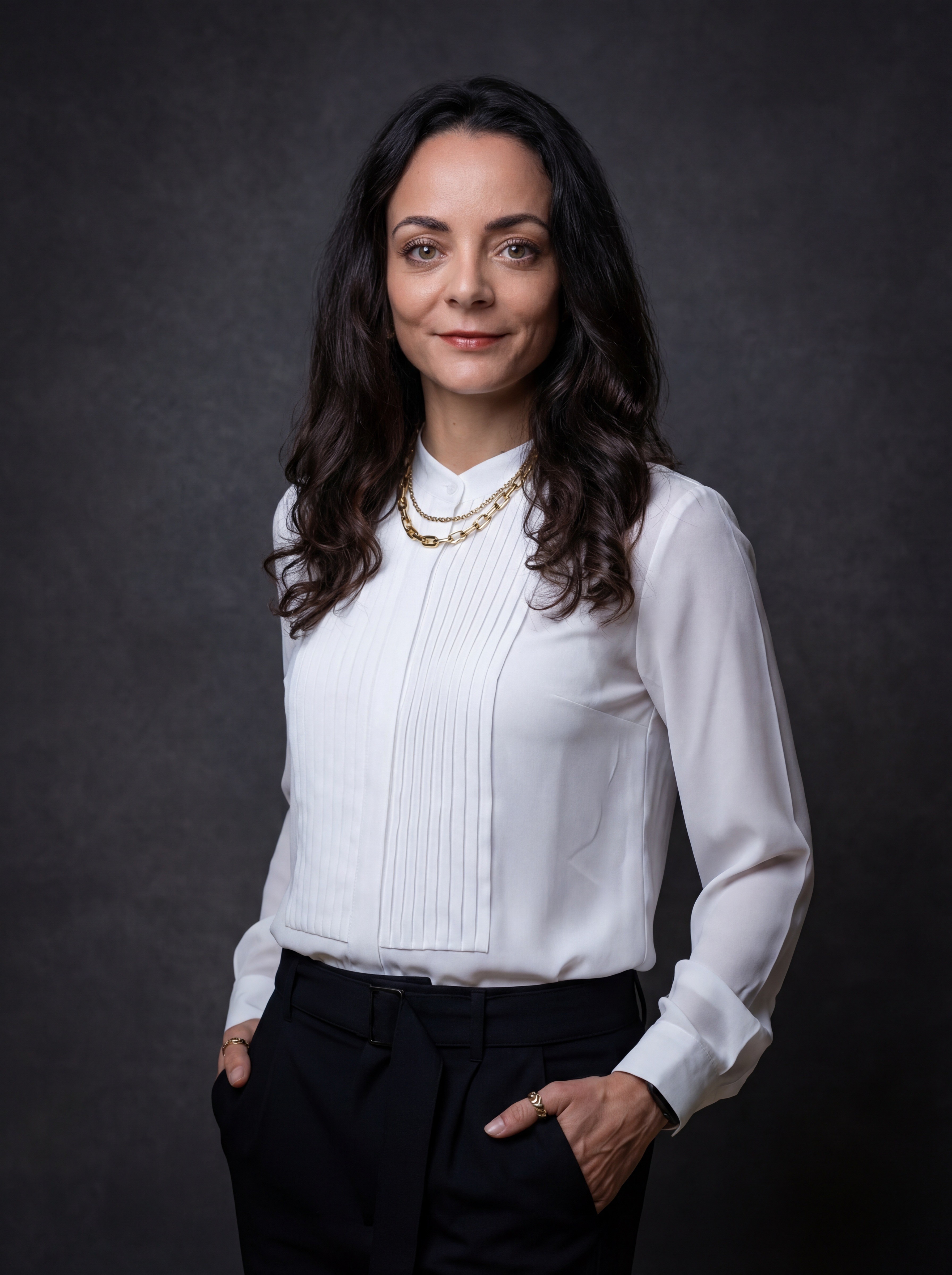
Written by
Sarah Hansen
Head of Research
Disclaimer – For Professional Clients Only
This communication is intended solely for persons classified as Professional Clients as defined by the Dubai Financial Services Authority (DFSA). It is not directed at Retail Clients and should not be relied upon by any person who does not meet the criteria for classification as a Professional Client. The information provided herein is for general informational purposes only and does not constitute, and should not be construed as, an offer, solicitation, invitation, or recommendation to buy, sell, or otherwise transact in any investment product or to engage in any investment strategy.
The subject matter discussed does not relate to a DFSA-regulated financial product or service. The content is intended only to provide a general update on market conditions and does not consider the specific investment objectives, financial situation, or particular needs of any recipient. It should not be relied upon as the basis for any investment decision. Past performance is not a reliable indicator of future performance. The value of investments and any income from them may fluctuate, and there is no assurance that the original capital will be preserved or returned.
Although the information contained in this communication has been obtained from sources believed to be reliable, Arboris Capital Limited makes no representation or warranty as to its accuracy, completeness, or fitness for any particular purpose. No liability is accepted by Arboris Capital Limited, its employees, or affiliates for any direct or consequential loss arising from the use of or reliance on this material. Arboris Capital Limited is authorised and regulated by the Dubai Financial Services Authority (DFSA) and operates within the Dubai International Financial Centre (DIFC), United Arab Emirates.