Private equity connects investors to privately held companies through a fund structure managed by a General Partner. The GP handles everything — sourcing deals, running portfolio companies, and eventually exiting investments — while Limited Partners provide the capital. It's a long-term, illiquid commitment spanning a decade or more, but one where returns are driven by active value creation, not market sentiment.

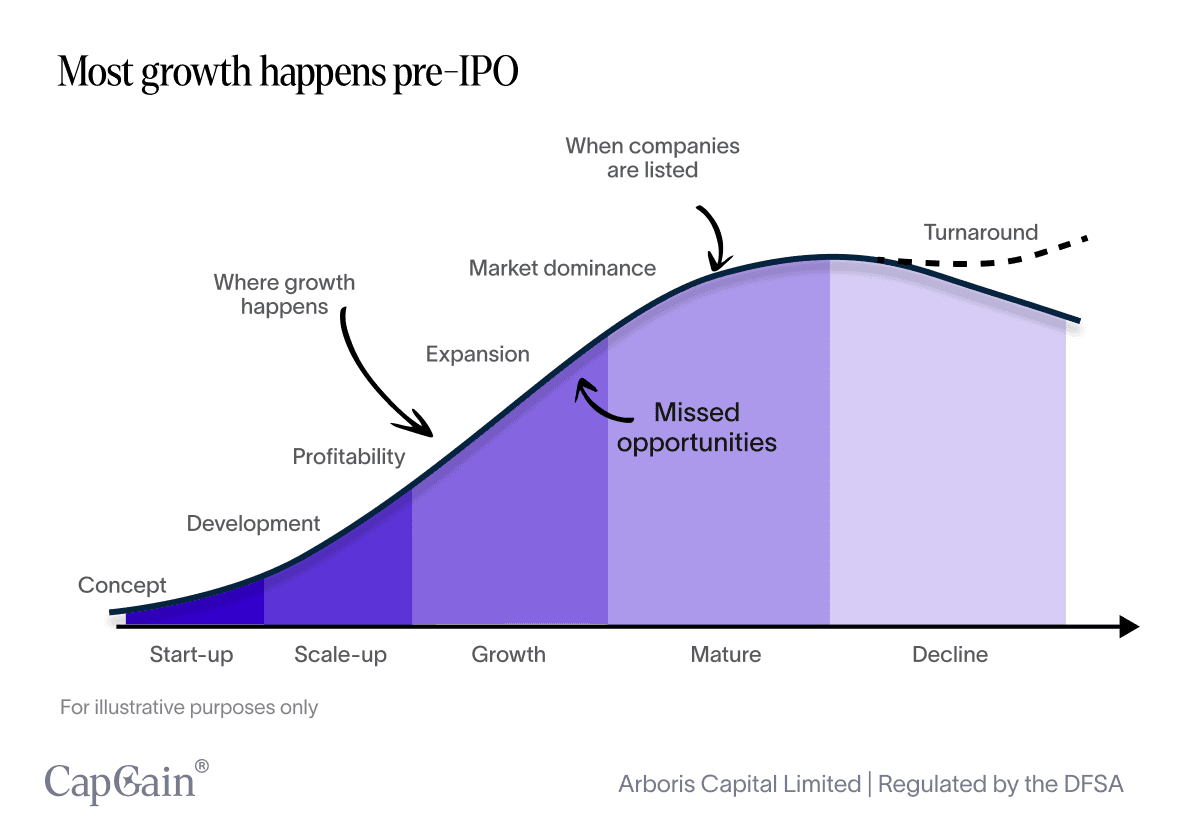
Private equity refers to investments in companies not listed on a public exchange — a universe far larger than public markets
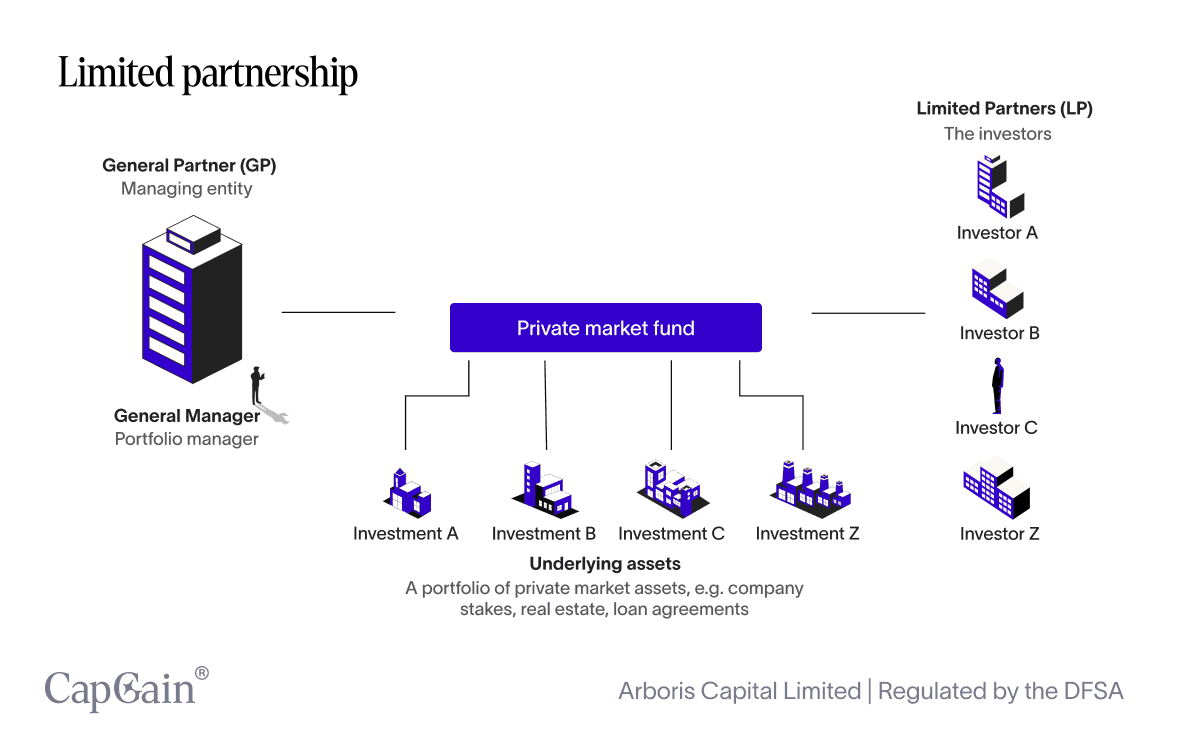
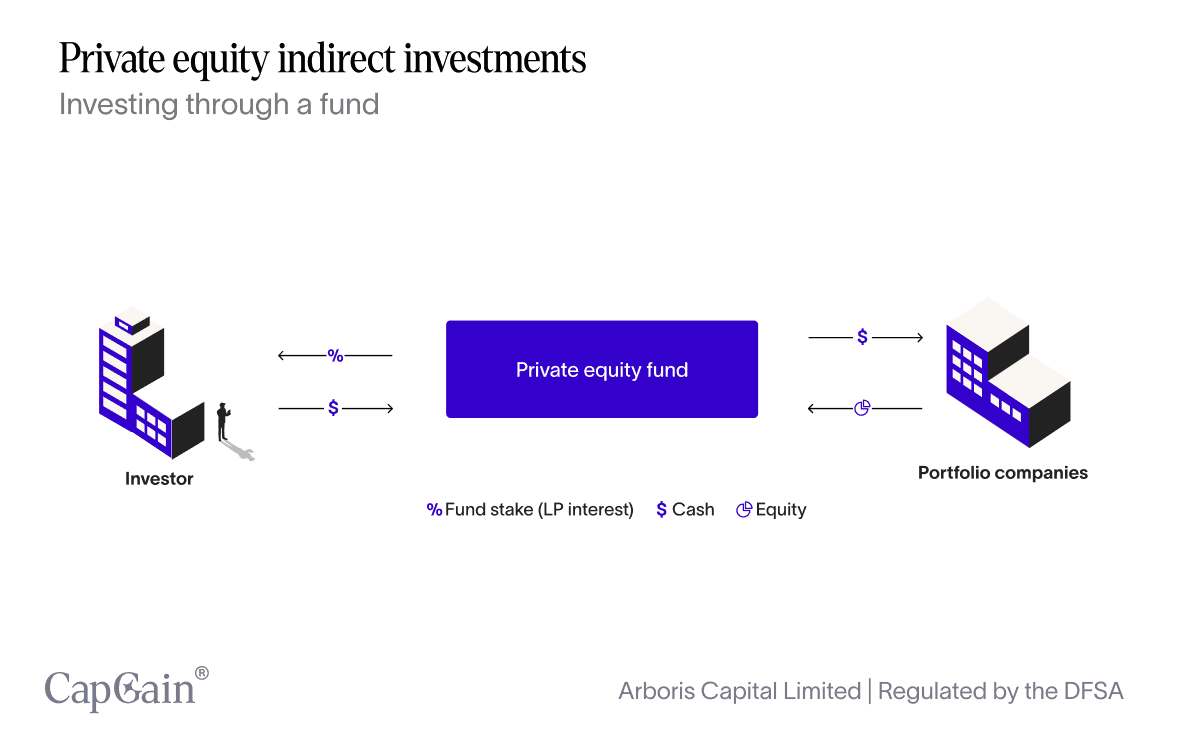
Investors don't buy into companies directly; they commit capital to a fund, which then acquires and manages a portfolio of private companies
The General Partner manages the firm and the fund— from raising capital and sourcing deals to actively managing portfolio companies and returning proceeds to investors
The Limited Partners provide the capital; the GP provides the expertise, access, and execution
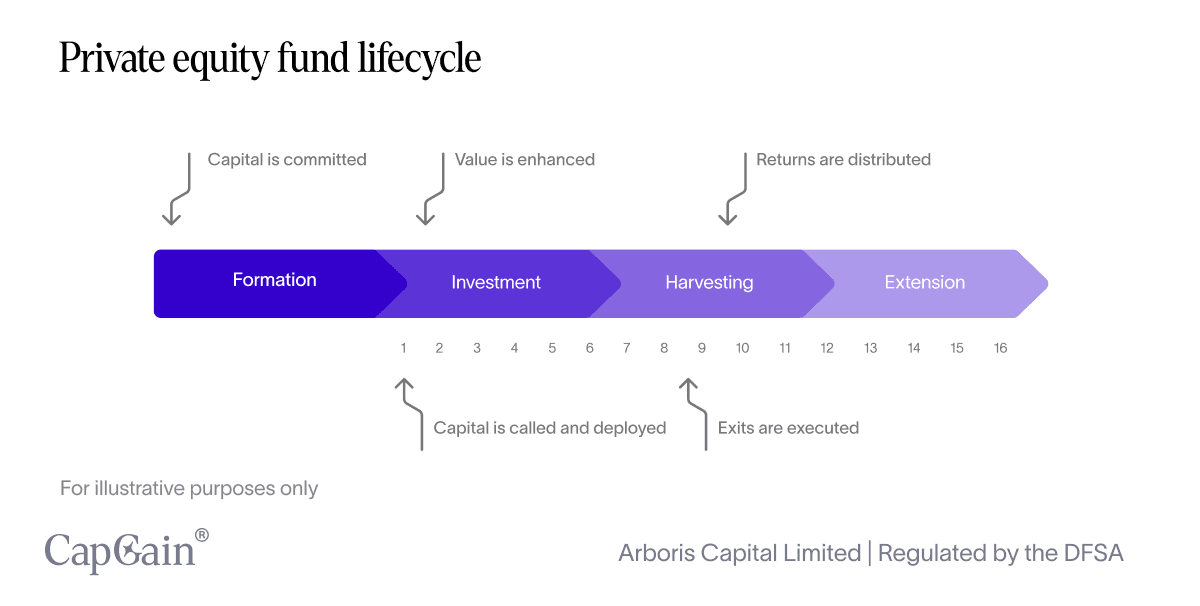
A typical fund lifecycle spans 10+ years, moving through investment, management, and exit phases
After acquiring a company, the GP works to increase its value through financial engineering, operational improvements, and strategic repositioning — then sells it
Unlike public market investing, private equity is illiquid, long-term, and entirely dependent on the quality of the fund manager
In {{Why Invest in Private Equity}}, we list the potential benefits of investing in private equity. However, despite the many advantages, it's important to recognise that private equity investments are investments. Hence, they are inherently risky by virtue of being investments: You are placing a bet on an unknown future, and no one can predict the future. Moreover, private equity investments are illiquid, long-term, and carry a risk of losing part or all of the capital invested.
To make informed investment decisions, it is crucial to comprehend the distinctive nature of this asset class and its different subcategories. In this article, we cover some of the most commonly asked questions about PE. What is it, how does investing work, and what makes an investment work?
What is private equity?
Private equity (PE) refers to investments in companies that are not publicly listed on an exchange.
While public markets represent only a relatively small number of companies globally, the vast majority of businesses remain privately held. These range from:
Startups and scale-ups at the beginning of their growth journey.
Medium-sized enterprises that make up the backbone of many economies.
Large, established companies that may choose to remain private for strategic or operational reasons.
Formerly listed companies that have been taken private, a process known as a “take-private.”
It is important to note, however, that not all privately held companies are accessible to private equity investors. Your best friend’s hot sauce business technically falls under the term private equity by virtue of not being publicly held. However, only a subset of private companies—typically those with the scale, growth potential, or strategic profile sought by private equity funds—are considered investable from a private equity perspective.
At the other end of the spectrum, some privately held businesses are large, multi-generational family-owned enterprises or privately controlled conglomerates. These firms may have significant revenues, global footprints, and thousands of employees, yet remain private for cultural, strategic, or governance reasons.
How can I invest in private equity?
Until recently, private equity was out of reach for most individual investors. Minimum commitments were high—often in the millions—and access was restricted to large institutions such as pension funds, endowments, and family offices. Beyond the capital requirement, investors also faced long lock-up periods, complex fund structures, and high barriers to entry.
That landscape is changing. Advances in financial technology and new regulatory frameworks have made it possible to access private equity with lower minimums and more transparent terms. CapGain builds on this shift, offering professional investors the opportunity to participate in professionally managed private equity funds (and other private market investments) without the historic barriers of size, access, and complexity.
How are private equity investments structured?
Rather than investing directly into a single private company, investors commit to a fund structure. This fund, managed by a professional General Partner, then acquires and manages stakes in multiple private companies.
The fund also sets the legal framework for the investment in terms of the division of roles and responsibilities of the overall investment. This framework is a limited partnership and comprises two legal entities, the Limited Partners and the General Partner.
General Partner (GP): The fund manager, responsible for sourcing, acquiring, managing, and eventually exiting the portfolio companies.
Limited Partners (LPs): The investors who provide capital. Traditionally, these have been large institutions such as pension funds, endowments, and family offices. More recently, regulatory changes and financial platforms have begun to create pathways for qualified individual investors, though access remains selective and subject to minimum requirements.
Why do we need a GP?
Fund managers acquire substantial or controlling shares in a company with all the responsibilities it entails: strategic overhaul, operational management, product and service development, market expansions, partnerships, and so on. In fact, it is those very responsibilities – or opportunities – that represent the main value drivers of private equity investments.
The average investor—whether institutional or individual—does not have the time or expertise to handle hundreds of companies, let alone drive them to profitability.
For one, managing companies and investments is a huge undertaking in and of itself. Secondly, institutional investors often make several investments in various assets, meaning they are indirectly invested in hundreds, if not thousands, of companies.
That's where the General Partner comes in. Placed 'in between' the investors and the portfolio companies, the general partner—or GP—is responsible for the fund management from formation to end.
What does the general partner do?
The private equity firm, acting as General Partner, manages the fund from beginning to end. This starts with raising capital and defining the strategy, ensuring alignment between investor expectations and the fund’s objectives. Once commitments are secured, the GP takes charge of sourcing and negotiating investments, deploying capital into companies that fit the agreed mandate.
Crucially, management doesn’t stop at acquisition. The GP is responsible for actively steering portfolio companies, monitoring performance, supporting management teams, and executing initiatives designed to grow enterprise value—whether through operational improvements, market expansion, or bolt-on acquisitions.
On the financial side, the GP administers capital calls and distributions, tracking when to draw on investor commitments and when to return proceeds from exits. At the close of the fund, the GP ensures that all assets are realised, profits are distributed, and reporting obligations are met.
The private equity firm, acting as General Partner (GP), manages the fund across its full life cycle. This role can be thought of in four broad phases:
Raising and structuring the fund: The GP defines the investment strategy, raises capital, and ensures alignment between investor expectations and the fund’s objectives.
Sourcing and deploying capital: Once commitments are secured, the GP identifies, negotiates, and acquires companies that fit the agreed mandate.
Active management of portfolio companies: Beyond acquisition, the GP works closely with portfolio companies—monitoring performance, supporting management teams, and driving value creation through operational improvements, market expansion, or bolt-on acquisitions.
Managing capital flows and exits: On the financial side, the GP administers capital calls and distributions, returning proceeds from exits to investors. At the close of the fund, the GP ensures all assets are realised, profits distributed, and reporting obligations fulfilled.
In short, the GP is both asset manager and business builder: stewarding investor capital while actively creating value in the companies it owns.
How are private equity investments different from public markets?
There are several key differences between private and public equity, including regulation, liquidity, and pricing. For now, let’s focus on the structural distinction.
Public market investors can buy shares of an individual company or invest through pooled vehicles such as index funds and ETFs. Either way, they own securities listed on an exchange and can buy or sell at will.
Private equity works differently. When investing in a private equity fund, you don’t buy shares in the companies directly. Instead, you own a stake in the fund, which then acquires and manages ownership stakes in private companies. This structural distinction means that private equity investments are typically longer-term, less liquid, and dependent on the fund manager’s ability to select and improve portfolio companies.
How does the investment process work?
The entire investment process for most PE funds typically spans over ten years or more. This period can be divided into distinct stages, each with specific objectives and activities that collectively drive value creation and returns for investors.
Investment phase (1–3 years): The GP identifies and acquires companies aligned with the fund’s strategy.
Management phase (3–5 years per company): The GP works with portfolio companies to improve performance—revenue, operations, margins.
Exit phase: Companies are sold to other investors, acquired, or taken public. Capital is returned to LPs.
The overriding objective of a PE fund throughout its duration is to generate a return on investment for the Limited Partners by increasing the value of the companies before selling them.
>>>>> 2025A020.d
What happens after the private equity firm invests?
After the private equity firm invests, it starts optimising the company's value. This is a complex undertaking that involves several steps, from optimising the company's capital structure to providing the company with capital and strategic guidance to generate more revenue and be more profitable.
As each company is unique in terms of business and circumstances, there are as many strategies as there are companies. However, the general strategy includes a mixture of financial engineering, multiple expansion, and value creation.
Financial engineering: Using leverage (a mix of debt and equity) to structure acquisitions, which can influence both risk and return.
Multiple expansion: Investing in sectors where valuation multiples may shift over time, depending on broader market conditions.
Value creation: Working with portfolio companies on initiatives such as operational improvements, governance, or strategic repositioning.
Final thoughts
Private equity is an ecosystem of ownership, transformation, and long-term value creation. Unlike passive investing in public markets, private equity investors play an active role in shaping companies’ futures.
At the same time, these opportunities come with risks: illiquidity, long horizons, and uncertainty. Understanding fund structures, the GP/LP model, investment cycles, and value-creation strategies is essential before committing capital.

Written by
Sarah Hansen
Head of Research
Disclaimer – For Professional Clients Only
This communication is intended solely for persons classified as Professional Clients as defined by the Dubai Financial Services Authority (DFSA). It is not directed at Retail Clients and should not be relied upon by any person who does not meet the criteria for classification as a Professional Client. The information provided herein is for general informational purposes only and does not constitute, and should not be construed as, an offer, solicitation, invitation, or recommendation to buy, sell, or otherwise transact in any investment product or to engage in any investment strategy.
The subject matter discussed does not relate to a DFSA-regulated financial product or service. The content is intended only to provide a general update on market conditions and does not consider the specific investment objectives, financial situation, or particular needs of any recipient. It should not be relied upon as the basis for any investment decision. Past performance is not a reliable indicator of future performance. The value of investments and any income from them may fluctuate, and there is no assurance that the original capital will be preserved or returned.
Although the information contained in this communication has been obtained from sources believed to be reliable, Arboris Capital Limited makes no representation or warranty as to its accuracy, completeness, or fitness for any particular purpose. No liability is accepted by Arboris Capital Limited, its employees, or affiliates for any direct or consequential loss arising from the use of or reliance on this material. Arboris Capital Limited is authorised and regulated by the Dubai Financial Services Authority (DFSA) and operates within the Dubai International Financial Centre (DIFC), United Arab Emirates.